
Intrepid Guides · Choosing Your Kit
The Large Format
Lens Explorer
Second-hand large format lenses come described in numbers that mean very little until you can see them. This tool turns those numbers into visuals. Pick any of the 120 lenses below and find out how much film it covers, whether that stretches to 5×7 or 8×10, how far you can push your movements, how wide it will look, and whether it will fit your lens board.
Focal Length
—
Aperture Range
—
Image Circle
—
35mm Equivalent
—
Shutter
—
Weight
—
Coverage And Movements
A lens projects a circle of sharp light. Your film is a rectangle sitting inside it. If the circle is only just big enough, the lens has to stay dead centre. If it is generously bigger, you can move the lens around and still have an image project onto your film — that spare room is your rise, fall, shift and tilt. Drag the film to feel where the lens runs out of movements.
Every image circle here is measured at f/22. Wide open the circle is smaller and softer at its edges, so a lens with only a little room to spare will have even less of it before you stop down.
Aperture
The iris inside the shutter. Wider (smaller f number) means more light and shallower depth of field. Stop the aperture down and you get a longer depth of field. Lots of lenses are sharpest a few stops down from the widest value.
—
—
Angle Of Coverage
How wide a cone of light the lens throws. Focal length and this angle together make the image circle — which is why a wide lens gives you so much room to move.
—
—
In 35mm Terms
Large format film is simply much bigger, so it takes a much longer lens to frame the same scene. Here is your film against a 35mm frame, and the lens that would match this view on a 35mm camera.
—
—
Shutter And Lens Board
Large format lenses come mounted into their own shutter. There are three common sizes, and the size decides the hole you need in your lens board — so check this before you buy.
—
—
Weight
Every gram hangs off the front standard, and a heavy lens on a light field camera is harder to keep steady — especially with the bellows racked out. Shown here against every lens in the list.
—
—
Inside The Lens
How the glass is arranged decides most of what a lens can do — how much it covers, how flat the field is, how much it flares. Here is the layout of this design, subject side on the left, film on the right. Each numbered outline is one group; a fine line inside it is where two elements are cemented together.
—
—
- Strengths
- Compromises
Shop Cameras
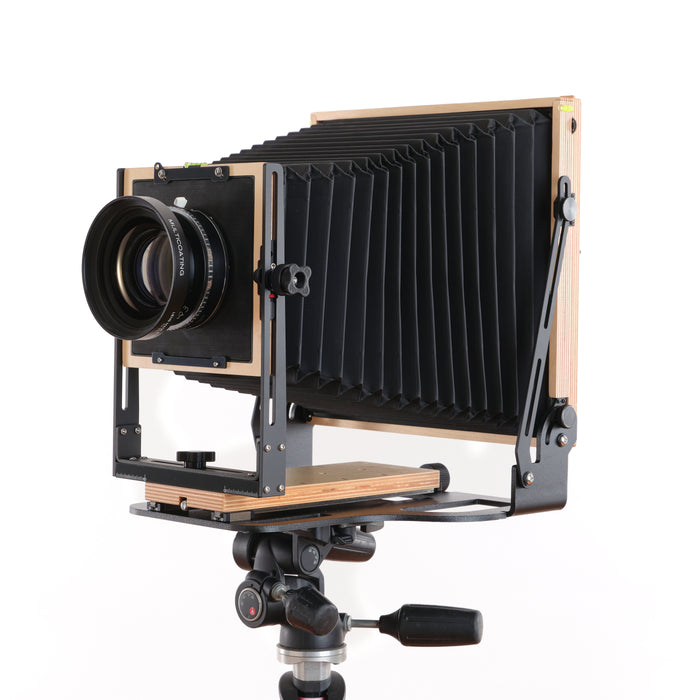
Intrepid 8x10 Camera
¥108,300
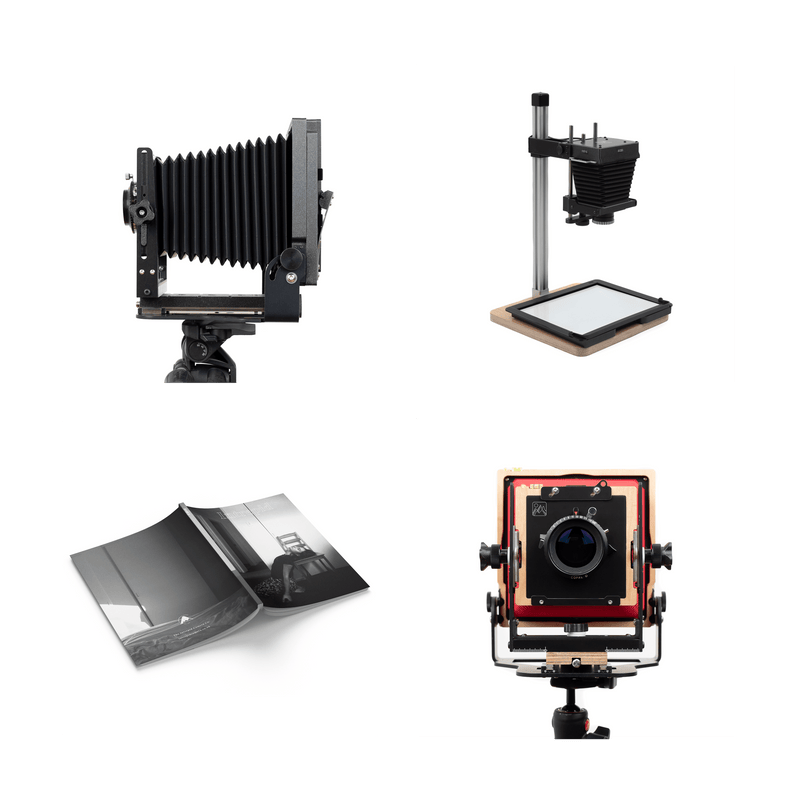
Weighing just 2.8 kg this is the lightest, most compact 8x10 film camera ever made. Now in its 4th generation and by far our most refined and advanced.
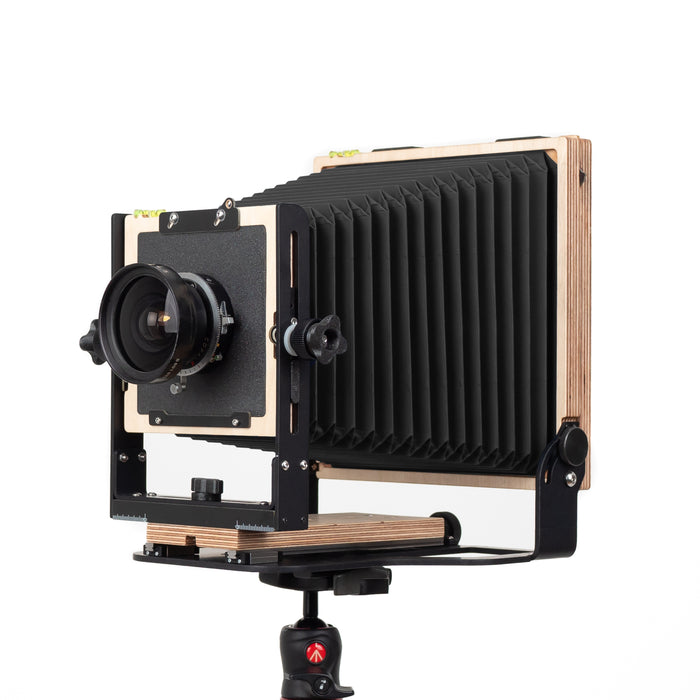
Intrepid 5x7 Camera
¥90,900
The latest Intrepid 5x7 features our most refined and advanced features yet. Benefit from the larger negative size of 5x7 without sacrificing portability.
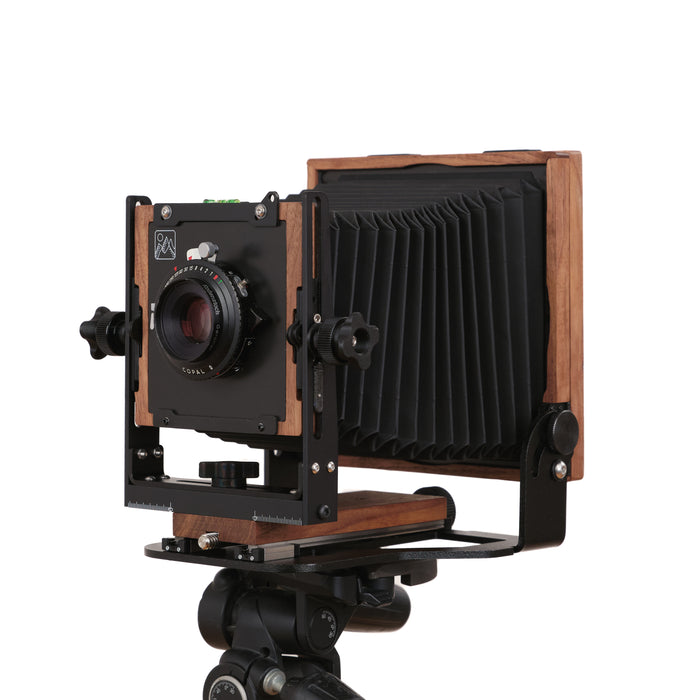
Intrepid 4x5 Hardwood Edition
¥101,400
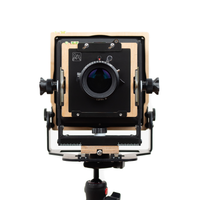
Available in walnut, cherry or beech, the Intrepid 4x5 Hardwood Edition is our most beautiful camera yet.
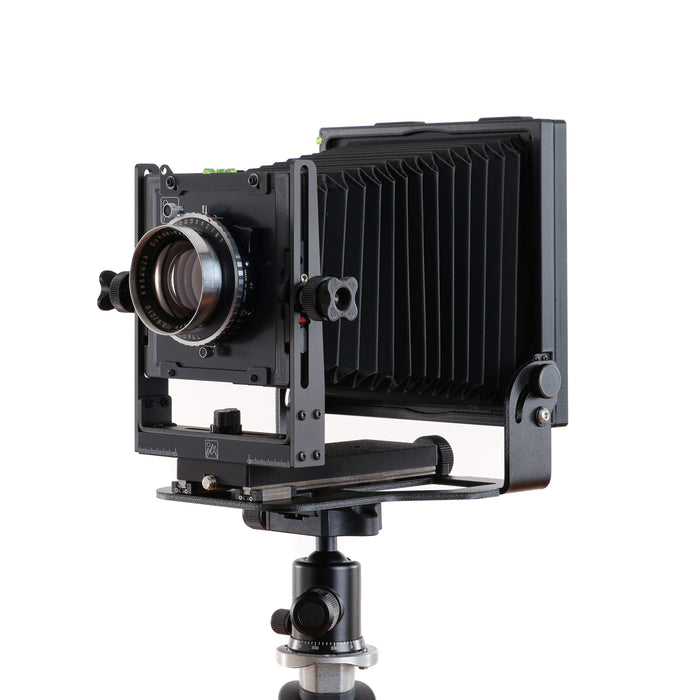
Intrepid 4x5 Black Edition
¥76,900
The Black Edition 4x5 camera is made primarily from high-quality 3D printed parts, giving it a sleek, modern look.